Ask smarter.
Answer with
context.
Turn your company knowledge into production-ready AI chatbots. Grounded answers, multi-team structure, and full cost visibility — built for real operations.
Requests per month
Retrieval strategies
Grounded answers
Faster than custom builds
AI assistants
you can't trust
Structured knowledge.
Measurable results.
Organization → Team → Environment
Clear ownership at every level.
Dedicated knowledge bases per scope
Each team and environment gets its own structured knowledge.
Playground testing before rollout
Validate chatbot behavior safely first.
Token and cost analytics
See exactly what's used, what it costs, and where.
Your provider keys, your cost
Use your own OpenAI, Anthropic, or other credentials.
One workspace.
Complete governance.
AskTheBot organizes everything from the top down: your organization contains teams, teams own environments, environments host knowledge bases, and knowledge bases power chatbots. Every resource has a clear owner.
Organization
Root workspace
Teams
Functional groups
Environments
dev / staging / prod
Knowledge
Ingested documents
Chatbots
Production assistants
Governance
Roles and access
Your knowledge, fully
automated end to end
Add a document and AskTheBot handles everything — from raw content to queryable vector index — automatically.
Step 1
Ingest
Files, URLs, text, Q&A
Step 2
Transform
Parse, clean, chunk
Step 3
Embed
Vector encoding
Step 4
Index
Store & optimise
Step 5
Serve
Query & generate
Everything to run AI
in production
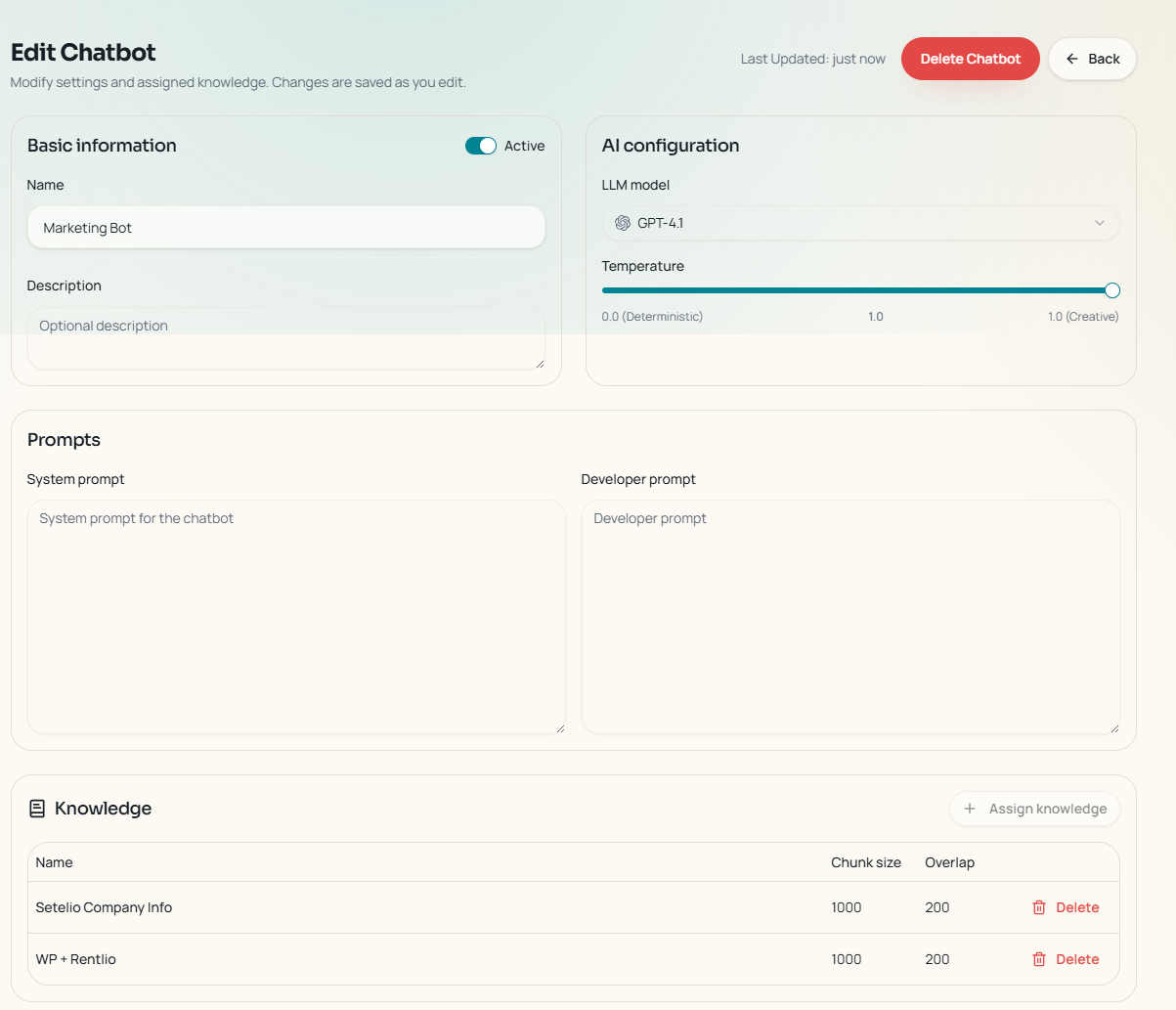
Chatbot management
Create, edit, activate, and manage chatbots with configurable model and retrieval behavior per environment.
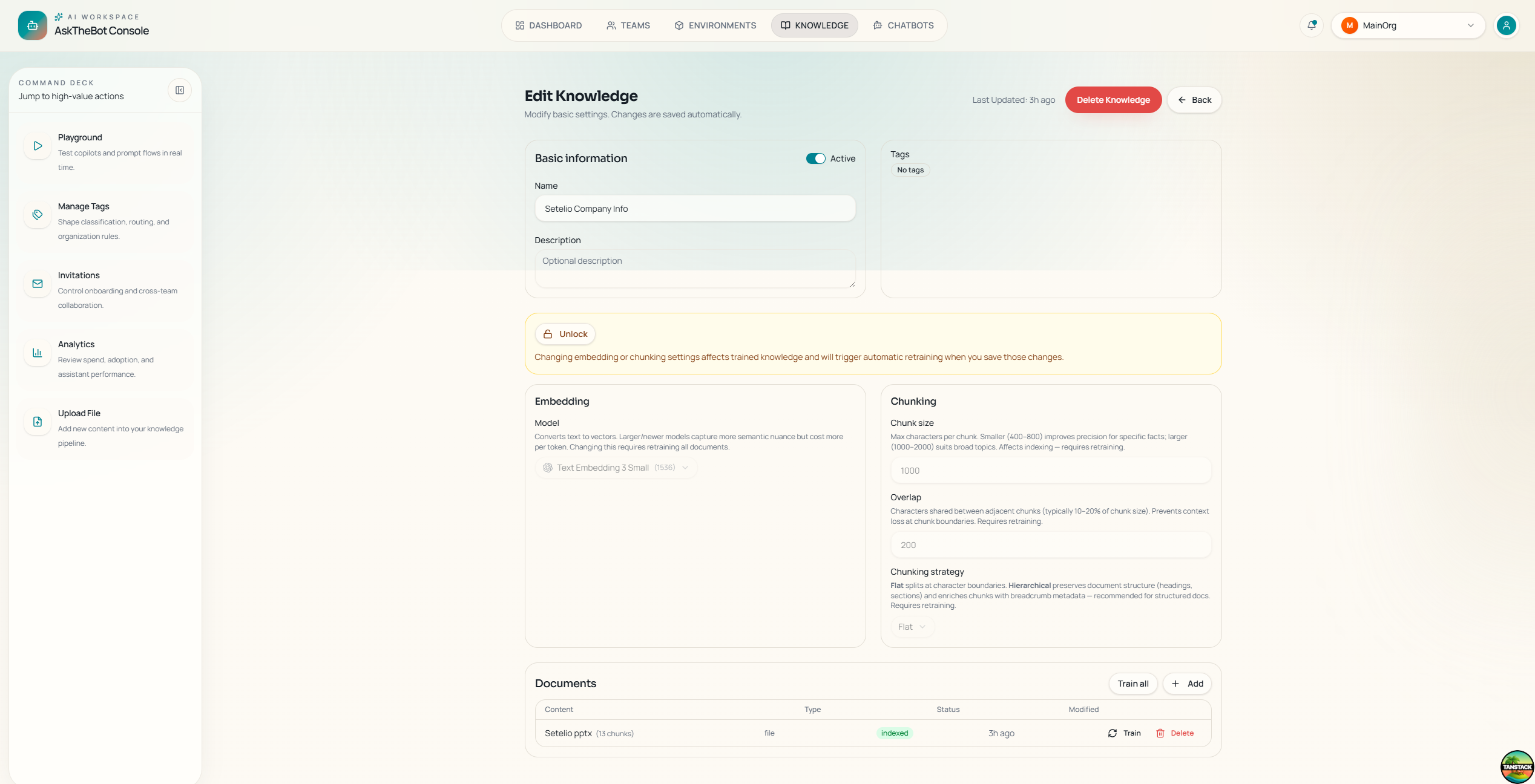
Knowledge bases
Create dedicated, scoped knowledge bases for teams and environments. Separate production from staging.
Document ingestion
Add content from file uploads, URLs, pasted text, and structured Q&A pairs. Multiple sources, one pipeline.
Training pipeline
Documents move through transform, embedding, indexing, retry, and cleanup workflows automatically.
Teams and environments
Organize assistants by team and by dev, staging, and production environments with clear ownership.
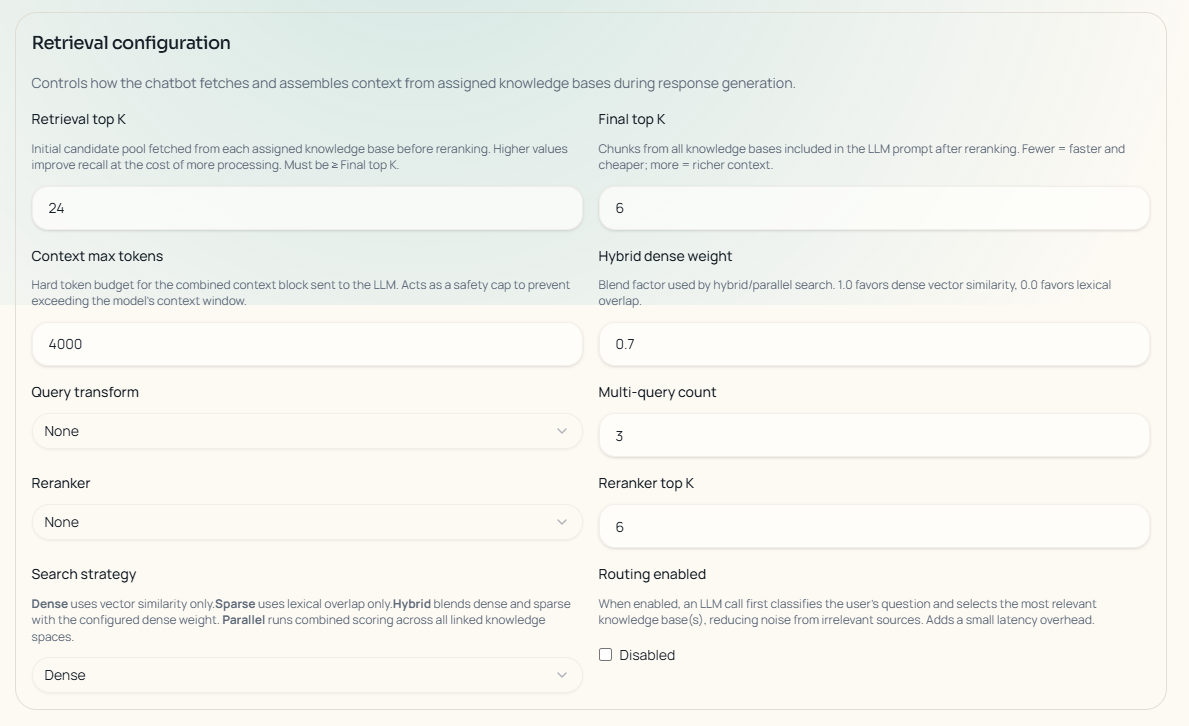
Retrieval quality controls
Hybrid retrieval, reranking, query transformation, multi-query, routing, top-k, and context token controls.
Playground testing
Test conversations in an isolated playground before deploying. Validate behavior before users see it.
Usage analytics
Track requests, tokens, and cost over time. Filter by chatbot, team, environment, or time range.
Cost attribution
Break down usage by chatbot, knowledge base, model, day, and source. No more mystery cloud bills.
AI provider flexibility
Use organization-level provider API keys or fall back to managed gateway billing seamlessly.
Security and governance
Keys stored encrypted. Organization roles, invitations, and controlled access to all resources.
Multi-tenant collaboration
Invite members, manage roles, create teams, and operate shared AI systems with clear ownership.
How answers get
grounded in your knowledge
Every query passes through a configurable retrieval chain — from expansion to reranking — before the LLM sees a single token.
Query
User input
Transform
Multi-query expansion
Hybrid Search
Vector + keyword
Reranker
Cross-encoder scoring
Generate
LLM with context
Answer
Grounded response
Fully configurable
Each strategy can be toggled independently per chatbot.
Quality over speed
Reranking improves answer relevance beyond raw vector similarity.
Context window control
Cap retrieval tokens to fit your model's context budget.
From knowledge to
production in five steps
A clear, repeatable workflow for building, testing, and operating AI assistants at any scale.
Create organization, teams, and environments
Set up your workspace. Invite members, define teams, and create dev, staging, and production environments to keep things clean.
Add knowledge bases and ingest documents
Build your knowledge foundation. Upload files, paste text, add URLs, or structure Q&A pairs. The training pipeline handles the rest.
Configure chatbot retrieval and model behavior
Wire up your chatbot. Choose the model, attach knowledge bases, tune retrieval strategies, and set context token limits.
Test in the playground
Run test conversations in an isolated playground. Validate answers, check retrieval quality, and iterate before rollout.
Launch and monitor usage, tokens, and cost
Go live and watch the dashboards. Track requests, token consumption, and cost attribution in real time.
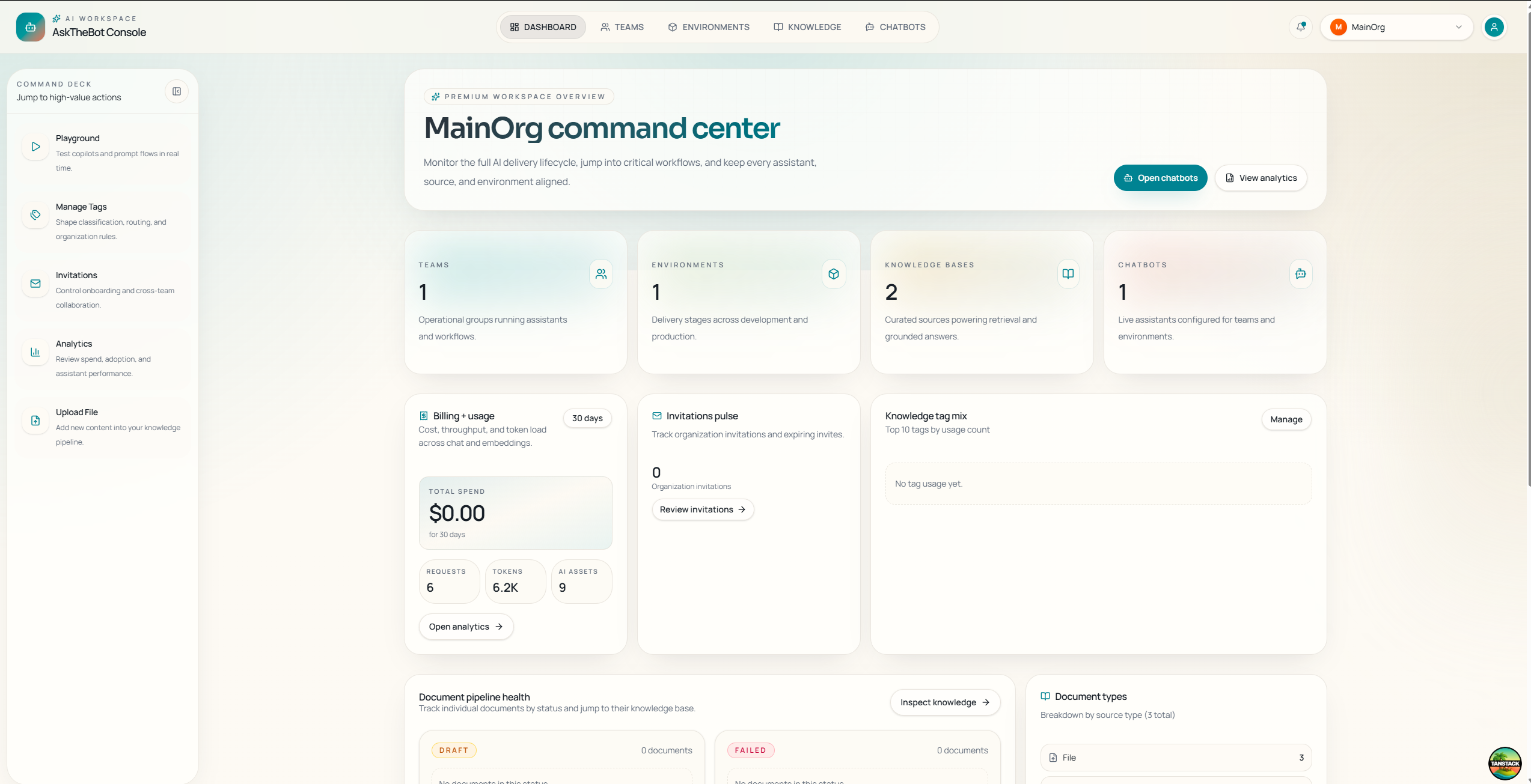
See what you're using.
Know what it costs.
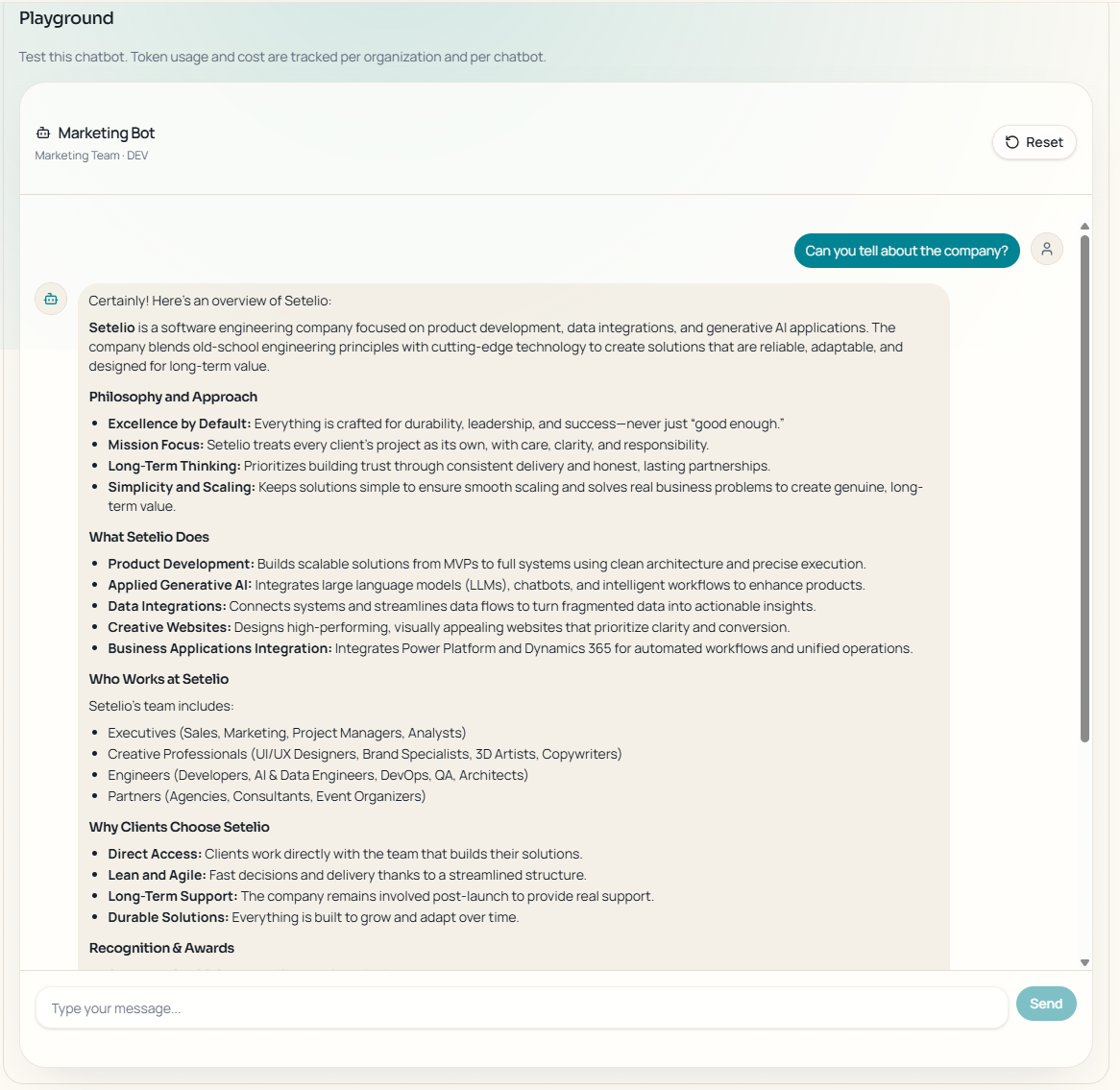
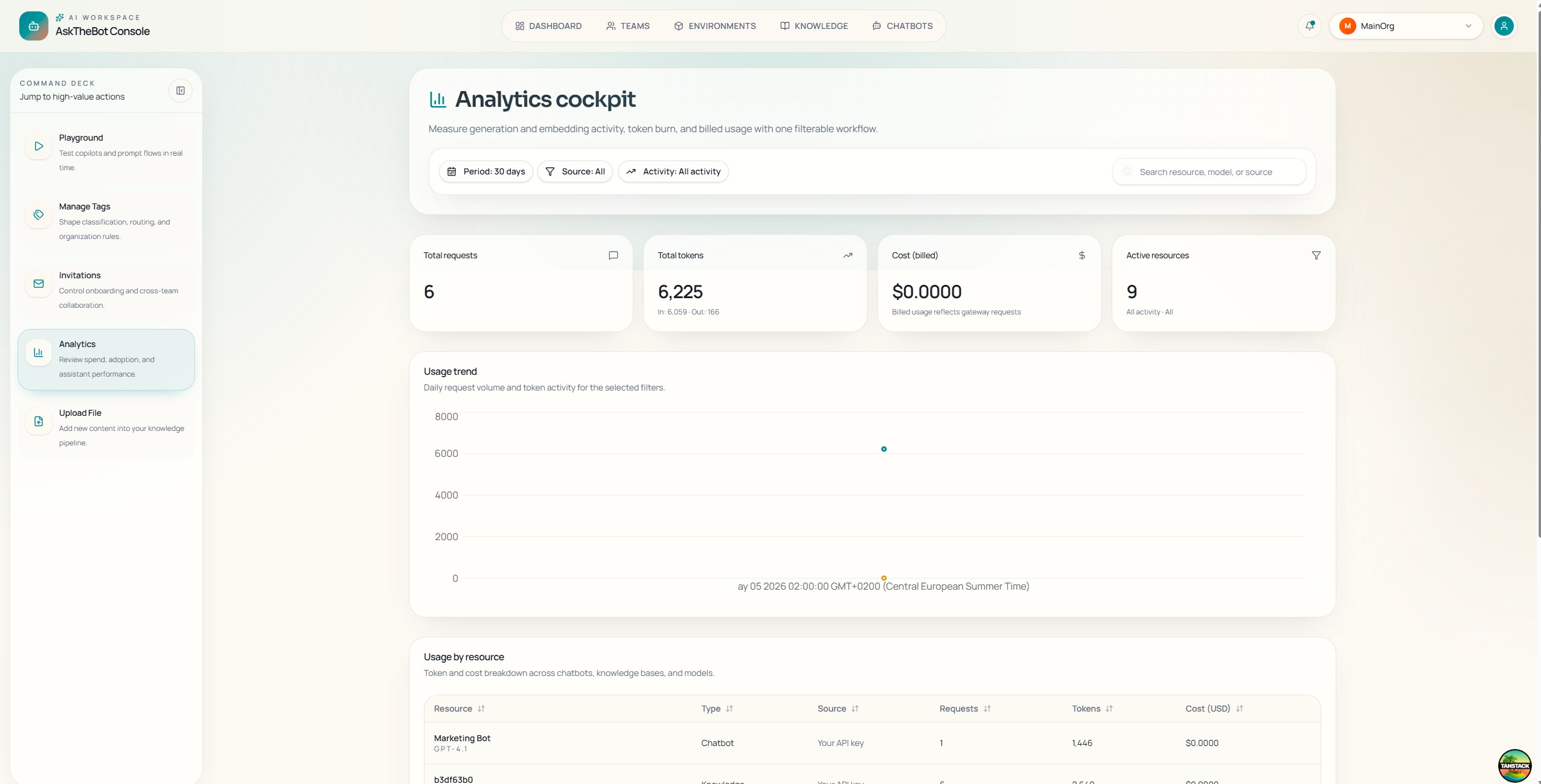
AskTheBot tracks every request, token, and dollar spent. Teams can see exactly what's being used, where it's happening, and what it costs — before it becomes a problem.
Requests over time
Daily and weekly trends per chatbot
Token breakdown
Prompt vs. completion split
Knowledge base usage
Cost attribution per KB
Gateway vs provider
Filter by billing source
Per-chatbot analytics
Drill into any chatbot
Embedding vs generation
Separate cost by operation
Built for teams
that ship real AI products
Whether you're building for customers, employees, or internal operations — AskTheBot gives you the structure and controls to do it reliably.
Customer support assistants
Answer product questions, handle FAQs, and escalate complex issues — grounded in your support documentation and policies.
Internal knowledge copilots
Surface company knowledge, SOPs, and institutional knowledge for employees without digging through wikis.
Sales enablement assistants
Give sales teams instant access to product details, pricing, competitive positioning, and proposal templates.
Operations and SOP copilots
Walk operations staff through complex procedures step by step — pulling from live SOP documents and runbooks.
Product documentation assistants
Let developers and users ask questions about your product in natural language, answered from your official docs.
Multi-team AI workspaces
Large organizations can run multiple teams, knowledge domains, and chatbots from a single governed workspace.
Built for structured AI operations
Frequently asked
questions
Your knowledge,
ready to answer.
Stop building chatbots that guess. Start building assistants that know — grounded in your knowledge, governed by your team, and visible in your analytics.